Monday, April 2, 2012

Happy World Autism Awareness Day!

Today is World Autism Awareness Day - my second one on the spectrum (my diagnosis came on 7/4/09). Since my diagnosis, which is sneaking up on three years ago on me, I've discovered a wonderful community of advocates online - they advocate for themselves, their siblings, their children, their friends. It's truly beautiful.

When I got my diagnosis, I was relieved. I had a name for the reason I couldn't get along with people. People in my real life were fairly understanding, but there weren't too many of those people, so it was a quick adjustment. It was the bigger world I was worried about - would people like me be supported out there? You don't see autism and Asperger's in girls as often (although part of that is that girls tend to be missed). Would people be accommodating of me?

It turns out that they are nowadays. I'm able to go out in the real world, mention that I have Asperger's, and not be frowned upon or assumed to be incompetent. In fact, some people are even accommodating enough that they know to not touch me in certain ways and don't overload me with noise. It's wonderful.

Acceptance on the internet, however, is a whole different matter, as I wrote in this article some time back. There's a growing misinterpretation of Asperger's in particular in certain online circles, and that's something I constantly combat and fear. Then I started feeling around on Twitter...and found a huge network of autism and Asperger's support. I became friends with fellow Aspergians, shared blog posts back and forth, and was able to feel loved despite not ever actually meeting anyone in real life. Yet. I'd love to someday have an autism/Asperger's Twitter conference so we can all meet up.

I just wanted to say thank you today. I should be saying thank you every day, but today's a special day for us so I figured today would be the best time to write this post. It seems all convoluted and emotional, and I apologize for that, but I just had to let all of you know how much you mean to me.

Here are a few tips for the neurotypicals reading this on how you can better support people with ASDs today:
  • Don't buy into the fear machine. Autism is a lifelong condition, but it's also a gift - it does make living in the real world hard sometimes, but look at all the amazing things autistic people create and do. Don't tell us you want to give us a 'cure.' That would change who we are completely, and we don't want to be changed. We want to be accepted. (Also, most of us self-advocates would prefer that you gave money to an organization that isn't Autism Speaks since they tend to shout us out and use fear to take people's money.)
  • Make an effort to listen. Today's a day for us to be heard, but we'd really like it if you listened all the time and learned to understand us. We're not all that different from you - we're just socially different. Intellectually, we can keep up with you, but we just struggle socially, so be patient with us if we don't get how to interact right away. 
  • Be judgement-free. Before I was diagnosed, I was treated horribly by my peers, who just thought I was an annoying intellectual. I'm very sensitive to negative judgement as a result, and I imagine many other people with ASDs are, as well. We're very sensitive to the general emotional state of a room, so make sure you bring some calm energy into our interactions and be gentle with us. Don't judge, just listen.
We just want to be accepted like you are. That's all we ask for - acceptance and proper treatment. Today - and every day - we advocate to gain these things. Please help us even just a little bit by accepting us for who we are and celebrating differences. 

Monday, March 26, 2012

Asperger's And Gender Roles

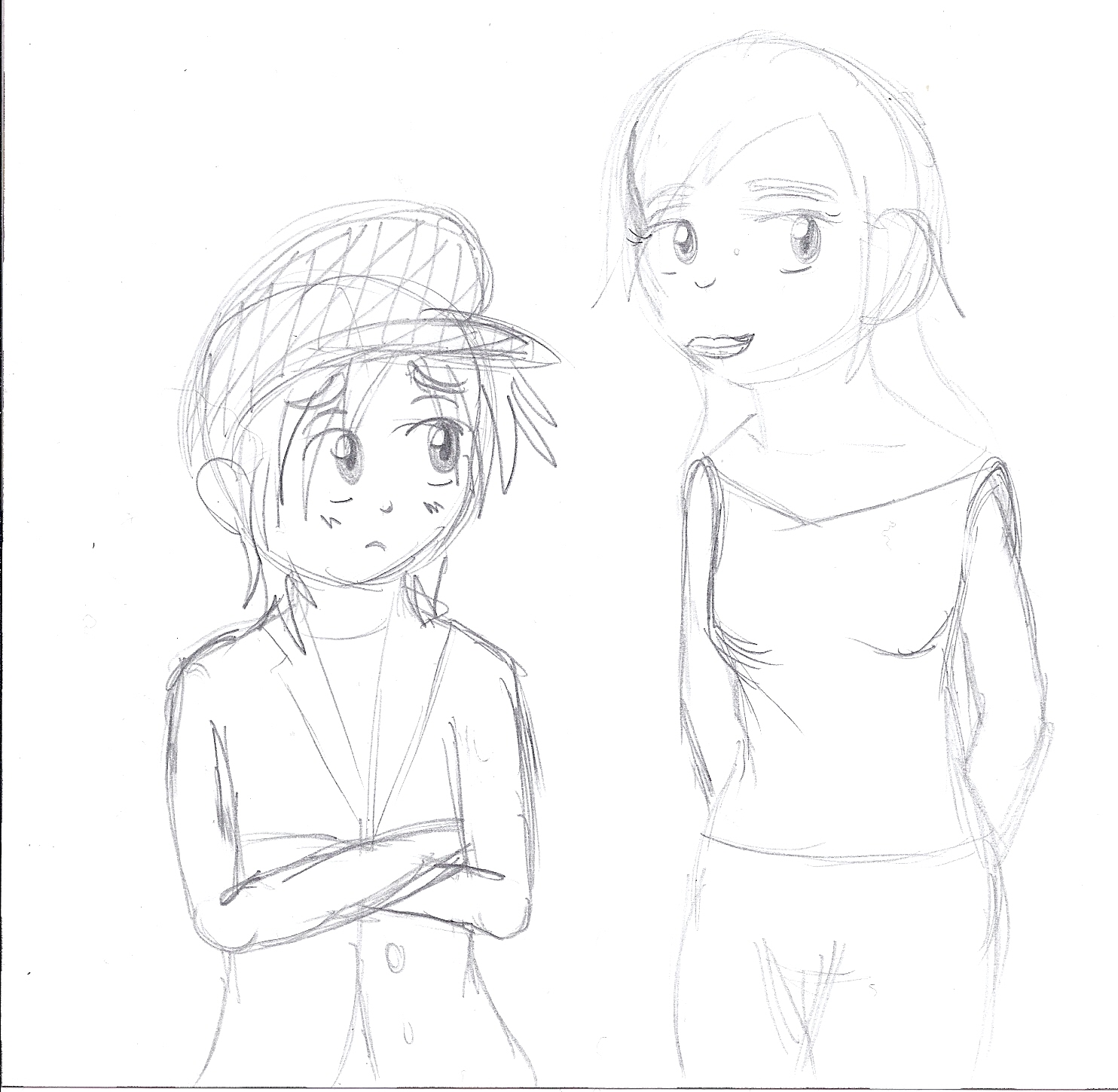
Ells (left), a creation of mine, doesn't adhere to gender roles.
Growing up, I was a tomboy. To be honest, I turn 23 in one month and I still am a tomboy. It's generally not such a big deal - it's more socially acceptable for girls these days - but it got me thinking the other day. I was rereading my copy of Rudy Simone's Aspergirls, and there was a chapter in there on gender roles. I read it through...and realized why I have so much trouble with certain things.

The fact of the matter is that I'm not just a tomboy: I don't adhere to gender roles. I don't see a need for gender roles. The only reason humans come in two physical genders is so that they can procreate and make more humans. Sexuality itself is very fluid and isn't tied to gender at all - people can be straight, gay, bi, trans, cis, pansexual, asexual - and yet based on our biology, we're slotted into two distinct groups by society and are raised to fit certain patterns of behavior. When we don't fit those patterns, we're ostracized.

It's one thing for a girl to be a tomboy. More and more girls are shedding the 'girly girl' image these days, and that makes me feel a lot better about myself and others like me who were never seen as particularly 'feminine.' As it becomes more and more socially acceptable, it makes it easier for people like myself. However, here's my snag: not only do I do things more commonly associated with men, but I do them like men. I have somewhat male speech patterns, dress in fashions that are basically men's tailored to a female body, prefer punching people to mind games when it comes to settling disputes, and even picture myself taking a knee and proposing to my future husband.

Things like this make it genuinely surprising to most people when they find out I'm straight. I'm assumed to be a lesbian more often than I would like, and that's not fair to either me or lesbians - lesbians don't fit a strict label, so don't assume they're all butch macho women. I have a friend from high school who's a lesbian, and she's one of the most feminine people I've ever met.

Here are the problems I've struggled with since I don't follow along with society's plan for me:
  • Dating is hard. It's another social construct, and since I'm not the stereotypical girl, I always end up friend-zoned as one of the guys...or not even approached, because, as mentioned above, people think I'm a lesbian due to stereotypes.
  • Growing up, it was really, really hard to find role models. I turned to fiction and still didn't find too many girls like me, save Eowyn from Lord of the Rings (thank God for ladies like Hermione and Katniss lately). In the end, I created many of my own, the most notable being Ells Robbins (see image), who is now the lead character in my webcomic The Historians. Other girls in that comic don't adhere to gender roles in some ways, but Ells basically defies them at every turn (including being a racecar driver on the weekends and making more sex jokes than the average twelve-year-old boy). However, to make myself feel better about my own prospects, I gave Ells a love interest (Clyde, next to her in the image), and plan on eventually getting them together.
  • People don't know what to think of me. I've got great parenting and nurturing instincts, which I've honed my entire life with my cats (and now sheepdogs), yet I don't fit society's description of what a mother should be. I'm a girl who thrives on history, sports, comic books and cars, yet I treat people very gently and tenderly unless they piss me off or are terrible people.
Defying gender roles is, according to Rudy Simone, quite common in girls with Asperger's. It's also visible in boys with Asperger's, which leads to them being teased by their peers mercilessly. Again, these boys might not be gay, either, but simply doing what they enjoy regardless of whether or not it makes them fit in. I was fortunate growing up and my parents supported my interests no matter what they were, but many people are less accepting. To parents reading this - the most important thing you can do is accept your children for who they are and love them no matter what. They may be different, yes, but you need to teach them that there is a place for them in this world by accepting them and loving them first. It will help give them the confidence to be themselves going forward.

And really, society, when did being ourselves become such a crime, anyway? I'm certainly not going to compromise who I am just to make some judgmental people happy, and neither should anybody else.

Wednesday, March 14, 2012

Managing Anger With Asperger's

People very rarely see me like this.
So I get angry a lot of the time. I hide this very, very well, though. I'm generally really calm in real life and I don't get outwardly stressed out in public anymore. In addition, I tend to laugh off issues, effectively using my sense of humor to cope with problems (and self-deprecate myself).

The truth is that underneath all of that, I have a temper. You'll probably see it if you watch me drive in traffic or watch a baseball game, and even then it's still milder than what it can be when I'm truly pissed off. Very, very few people have seen me enraged, but when I get there, my voice gets really deep and distorted and adrenaline courses through my arms (I usually take that out by throwing a pillow or some other harmless object in the general direction of nobody). The strangest things set me off, too, like not getting a chance to enter into a conversation with somebody. (This happened the other night.)

Keeping yourself calm is one of the most important things Aspergerians need to learn how to do in the adult world, where meltdowns are generally seen as psychiatric issues and scare people. Unless your goal is to convince everyone that you need anger management classes, it's good to know how to control your meltdowns so you can continue with your life happily and other people don't judge you. Even people who know I have Asperger's have told me to ease off when I'm having meltdowns, which made me realize that it's probably for everyone's best interests that I keep myself calm.

Before I explain how I keep myself calm and don't give in to my anger, let me just clarify that I don't mean that we have to conform with people. Neurotypical people need to control their anger, too, and if they let loose they're looked down upon just the same way we are. Anger management itself is a very important skill that all children need to learn, and once they reach adulthood if they haven't quite gotten it down they could run into issues down the road.

My Asperger's Child has a great article featuring 50 ways to calm down your Aspergerian kid when he or she is having an anger meltdown. My personal technique for myself happens to be on that list - I pull out my sketchbook and draw or I pull out a writing notebook and write. I never travel anywhere without at least one of those things, frequently both, and bringing them along allows me to throw my energy into my creative work when I get anxious, angry or upset. By giving myself something productive to do, I don't lash out at anything or anyone, and it ends up being oddly soothing to put my feelings on the page, even if it's through fictional characters. Other people go for a run or exercise to take out their stress. It's even more important if you happen to have an ASD and are subject to raw, powerful emotions that sometimes seemingly come out of nowhere.

My writing and drawing are what keep me sane. They also allow me to run this blog. Once again, I don't know where I'd be without them.

Saturday, February 18, 2012

Haircuts: Not Very Fun

I hate when my hair sticks to my face because it's wet. 
I don't like getting haircuts.

There's a number of reasons I hate them, but once I was diagnosed with Asperger's (it'll be 3 years in July already - holy cow!) I realized why some of them existed. Getting a haircut is annoying to begin with for me because I can't multitask during it and get other things done (sportswriting, drawing, etc.), but the fact that a salon is sensory hell makes it significantly worse.

There is nothing I hate more than being wet. I'm not sure why, but I have never liked being wet. When you get a haircut, your hair is usually washed first at the salon and is therefore wet. This makes it stick to your face and neck, which is itchy and uncomfortable...and wet. It's not cool.

The salon is also full of strange smells because of all the beauty products and shampoos and lotions and whatnot that they use. Too many smells can be overwhelming for a neurotypical person, let alone someone with an ASD. It's an extremely uncomfortable experience, and when you're also having physical sensory issues because EVERYTHING IS WET, it adds to your discomfort. It's also not cool.

Then there's the part where they actually dry your hair. My stylist is the absolute best and she does an incredible job with my hair. I love her. However, when she's drying my hair, she yanks my head all about and uses a hair dryer so hot that the tips of my ears turn red before she's done. I know you need heat to straighten your hair, yes, but that much? It just ends up hurting me. I wonder if she sees my wincing face in the mirror. It's really, really not cool. (Actually, it's quite hot.)

Long story short, getting a haircut can be a sensory nightmare. I'm not even very far down on the spectrum and it's miserable for me. I know NTs who are bothered by everything at salons, too. It's just not a fun experience, and it's just made worse if you're on the spectrum and have sensory issues.

At least by the end of it, I look like this, which is a nice consolation prize:

Tuesday, February 7, 2012

Steph Appeal vs Sex Appeal

Let's talk about sex appeal versus Steph Appeal.
It's almost Valentine's Day, and for the 23rd year in a row, I'm single. I've never been on a date in my entire life, and that's been okay because I've been working on getting my life in order and focusing on my education and career up until now. Besides, instead of Valentine's Day I celebrate a holiday called Pitchers And Catchers Report Day around the same time in February every year, which is one of the most important holidays of the year on my calendar. However, I got to wondering why I've never been asked out before in my entire life despite being a fairly cute girl who's very nice to people. In the meantime, girls who were all essentially the same person went on plenty of dates, got laid, were in relationships...all those things I've never done.

Then again, none of those girls have probably ever reached inside the stomach of a cow. But I digress. (I have, however, done some pretty cool stuff in the name of science.)

Anyhow, I concluded this morning that I don't have traditional sex appeal, which may have something to do with why I didn't attract the high school and college set of boys. I don't wear form-fitting outfits, preferring comfort to style. I don't know how to flirt. I hate how makeup feels on my face - it itches and I feel sealed up - so I don't wear it. I keep my hair short, so I can't flip it in a bar to get someone's attention. I'm just...not very traditionally attractive.

I have what's called Steph Appeal instead.

Okay, let me explain that. I have a lot of things about me that would make me a great catch for somebody, although they're not often what people traditionally look for in a girl. Here are my best attributes:
  • I'm a nerd. I play video games and read comic books and sci-fi and fantasy novels, as well as classical literature and history books. Basically, I'm not the girl who would force you to throw out your comic book collection if we moved in together. Hell, I'd be the one adding to it.
  • I LOVE SPORTS. Hell, I WRITE ABOUT SPORTS. There's a fairly good chance that I know more about baseball than you. In fact, when I'm watching TV, it's usually baseball. Sometimes it's some other sport or maybe something really geeky. Basically, you won't have to fight with me over the remote if you want to watch sports.
  • I have strangely good parental instincts. I credit this to always having cats and dogs in my house.
  • I'm a genuinely nice person.
  • I'm fun! I like doing stupid things and once I get to know you I'm cool to hang out with.
Oh, and I guess I'm pretty cute. That, too.

So...who wants to be my date?

Wednesday, January 4, 2012

Asperger's On The Internet: Negative Perceptions

I'm a geek. I'm very open about being a geek. I go to anime conventions to sell my fanart and I'm currently reading a Star Wars novel starring a very minor character best remembered for blurting out "Look at the SIZE of that thing!" at the first Death Star. Of course, this means I enjoy taking part in my fandoms, and that includes reading sites like Fandom!Secrets. It turns out, though, that this might not be the best idea lately - things are getting a little weird with Asperger's in the fandom world.

Namely, a lot of people don't believe Asperger's is real.

There's a major flaw with this way of thinking, as I as well as many other people have been professionally diagnosed with something that was officially listed in DSM-IV. It's definitely real. The problem, though, is that a lot of people in fandom assume that everyone with Asperger's is like a few outliers in the fandom universe. These outliers have hurt the cause of Asperger's in popular culture a lot more than they realize. And here's the major problem - a lot of the outliers are self-diagnosed antisocial people who may not actually have Asperger's and simply use it as an excuse for behaving inappropriately.

Here's TV Tropes on Asperger's Syndrome. Note that TV Tropes handles Asperger's maturely. But then look at Uncyclopedia. It actually hurts a little bit. It's not the worst example, but it's a little sad to see it handled in such a way.

Now here's the one that really stings. Look at Encyclopedia Dramatica. This just makes me flat-out angry.

I'm noted for my ability to laugh at myself, especially when it comes to my Asperger's. I find this to just be a gross over-generalization of a few people on the internet who are doing the worst thing possible for Asperger's: using the disorder as an excuse to act like assholes. A lot of those people who do that are self-diagnosed. There's nothing wrong with self-diagnosis if you believe you have genuine signs of Asperger's. The problem is that some antisocial people have begun assuming that they have Asperger's because they don't like being around people, and they then use this self-diagnosis as an excuse when they don't behave with regard to social standards on the internet.

When I first found the article on September 23rd, this is what I wrote on my Tumblr:

So here we go.
1. This article claims that everyone who discusses having Asperger’s on the internet is using it to get attention or sympathy. As a self-advocate, I can tell you that’s not the case. I try to explain my differences from non-ASD people whilst at the same time believing in coexistence.
2. I think this article exists on Encyclopedia Dramatica because too many people have been acting out and then blaming their ASDs. If an ASD person makes a social mistake/comes across like a jerk, they often don’t realize it. The higher-functioning ASD people who do realize it will either a) acknowledge they made an error and apologize or b) blame their ASD and absolve themselves, thus setting a poor example for the rest of us. I love those of us in group A.
3. I don’t think my disorder, however mild, should be considered an excuse for my behavior if I make a mistake, especially given that I am high-functioning enough to make an effort to socialize and assimilate into mainstream society. Some people are so far down the spectrum, however, that they are unable to do so, and this article mocks them, as well. Hand-flapping is an early sign of autism - it’s not common in people with Asperger’s in comparison to how often you see it in autism.
4. If you’re high-functioning enough to realize you’ve made people upset, you shouldn’t use your ASD as an excuse. That leads to the negative stereotypes in the article.
5. I know Encyclopedia Dramatica is trying to be funny, but I don’t think they did a good job of it at all. I’m pretty good at laughing at my Asperger’s and this actually hurt me to read.
Moral of the story?
~ Your ASD is not an excuse if you can function high enough to think to use it as one.
~ Negative stereotypes about ASDs are very strong because some ASD people use it as an excuse for bad behavior.
~ Both the mocking and the excuse-making have to stop for ASD people and non-autistics to see eye-to-eye.
Okay, I’m done being angry for tonight. I just really couldn’t let this slide.
 Originally, I had a knee-jerk reaction to this post. I got angry. I realize now that it wasn't entirely aimed at most people with Asperger's on the whole - it was aimed at the people who claim to have Asperger's and use it as an excuse to act like jerks. Those people may or may not actually have Asperger's. That's a biiig problem for those of us who want to self-advocate, especially online. The issue is that because of these negative perceptions people have due to these folks on the internet, Asperger's isn't often taken very seriously. I'd love to tell people how certain fictional characters have made me feel better about myself and my Asperger's, but I'd end up hearing from trolls that my Asperger's "isn't real" and that I'm "probably just a jerk who lives in my parents' basement and is using Asperger's as an excuse." I know they wouldn't listen to reason, because trolls just try to stir up trouble, so there's no point in trying to reason with them - that's why we always say "don't feed the trolls" on the internet here.

This depresses me, to be honest, since the people I know on the autism spectrum are the kindest, most genuine people I know. Things like this remind me that we're still far from being truly understood.

Monday, January 2, 2012

Writing Therapy

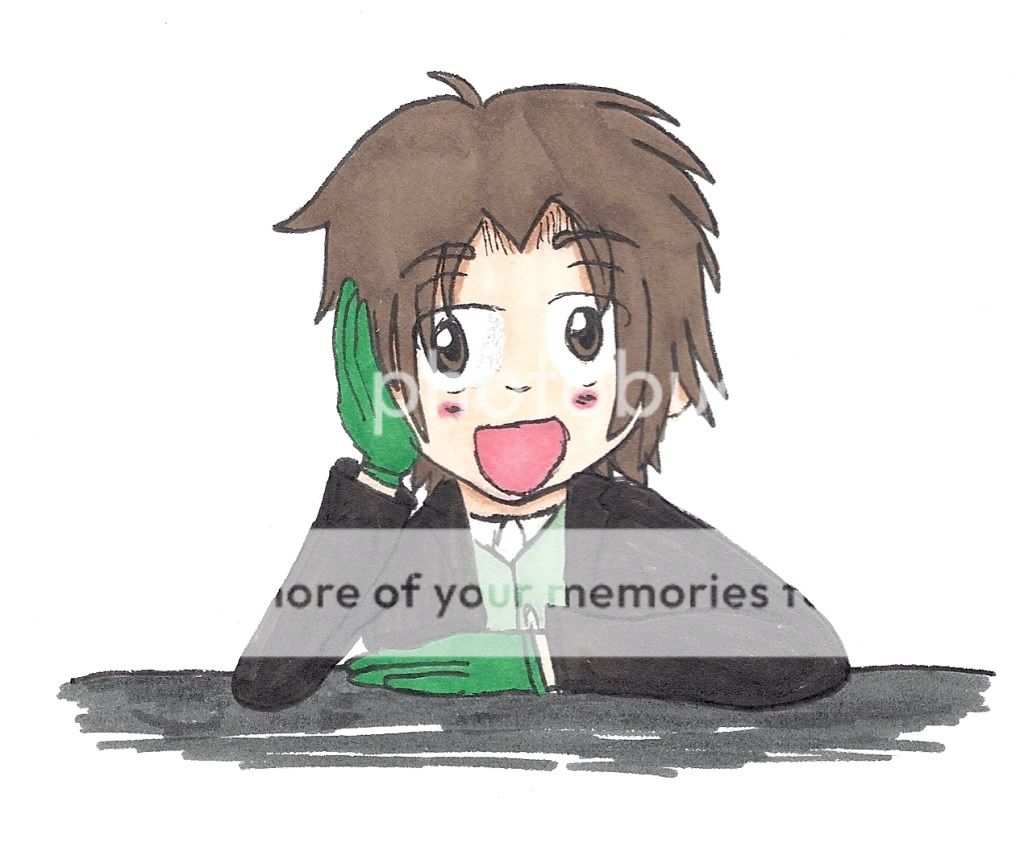
This is Dustin Thatcher, one of my two main characters.
I like writing. I make no secret of that since I have about ten million blogs that I update on a fairly regular basis in between drawing cartoons and watching Old English sheepdogs. One of them is about a novel that I'm working on, Londinium. The thing about the book is...well, I've been trying to get myself to write the thing for seven years now. Seven years. College got in the way for a while, and then I became a much better writer than I was in high school, so what I had written is currently being re-written.

You know what, though? Rewriting things feels fabulous. Getting back in touch with my characters feels fabulous, too. They're old friends of mine. And you know what? They were my friends when I didn't have any friends. Basil and Dustin, my main characters, have been around since December of 2004. This year, I've resolved to actually tell the world their story.

You can follow my quest to tell their story - as well as read some fun research nuggets I dig up - at Londinium's official blog, which is here. The healing power of writing is vastly underrated in this world. Having these two and their friends around for all these years has gotten me through some really rough times in my life. I'm so honored to be able to repay them in this way.